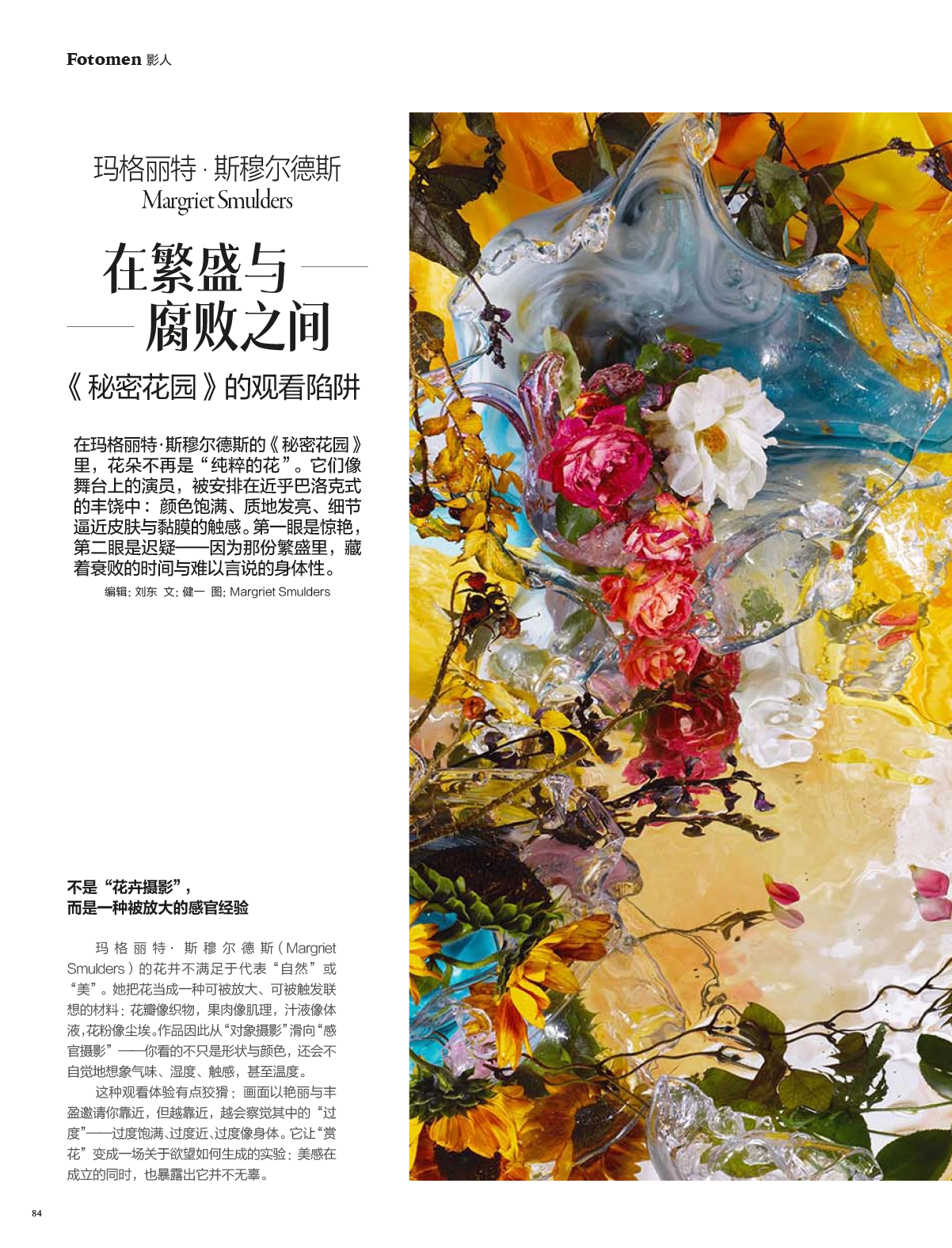
In Margaret Smulders’s The Secret Garden, flowers are no longer “purely flowers.” They are like actors on a stage, arranged within an almost Baroque abundance: colors fully saturated, surfaces gleaming, details so close they verge on the tactile—like the feel of skin and mucous membranes. At first glance, it is dazzling; at second, hesitation sets in—because within that lushness lies the time of withering, and an unspeakable corporeality.
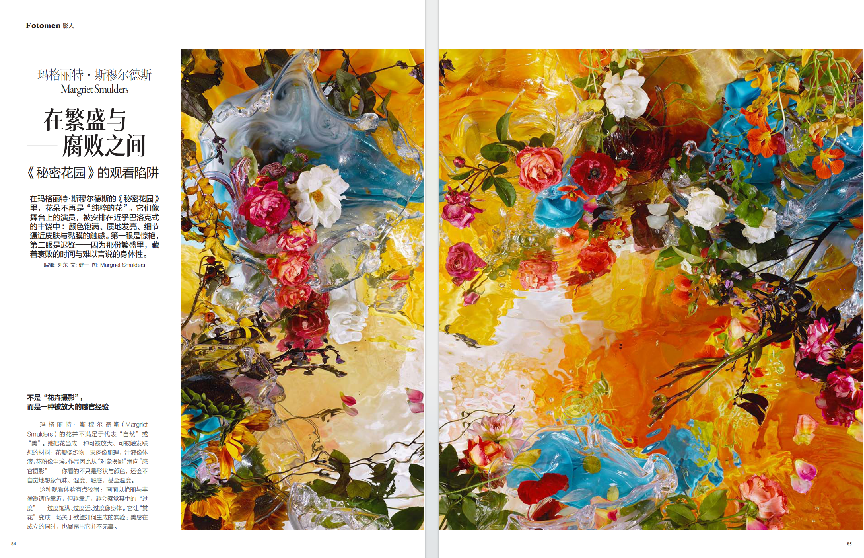
Not “flower photography,” but an amplified sensory experience.
Margriet Smulders’s flowers are not content to stand in for “nature” or “beauty.” She treats them as a material that can be enlarged—one that can trigger associations: petals like fabric, pulp like texture, sap like bodily fluids, pollen like dust. Her images thus slide from “object photography” into “sensory photography”—what you see is not only form and color; you also, almost involuntarily, begin to imagine scent, humidity, touch, even temperature.
There is something sly about this mode of looking: the picture invites you in with its brilliance and abundance, yet the closer you get, the more you register its “excess”—too full, too close, too much like a body. It turns “admiring flowers” into an experiment in how desire is produced: even as beauty takes shape, it also reveals that it is not innocent.
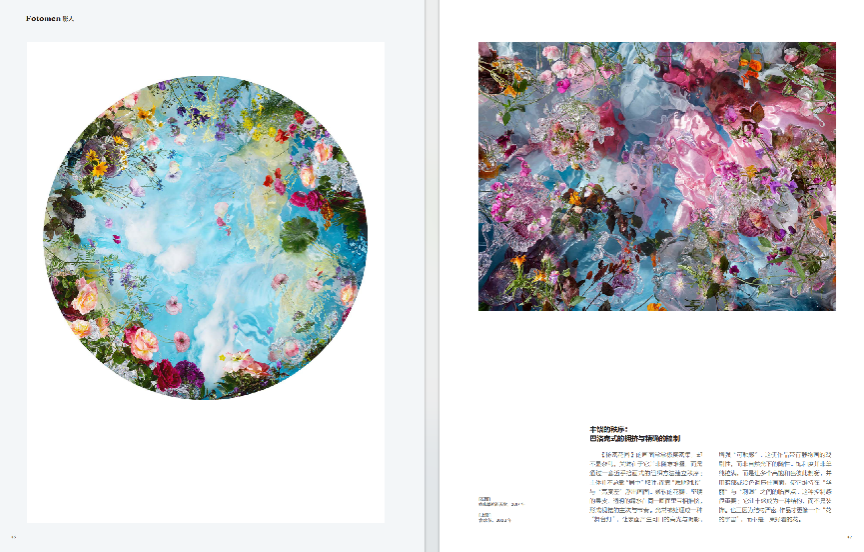
An Order of Abundance: Baroque Crowding and Precise Control
The images in *The Secret Garden* are often extremely dense, yet never feel messy. The key is that they are not built through arbitrary piling-up, but through an almost painterly method of organization that establishes order. The subject does not always prevail by being “centered”; it emerges through contrasts of texture and differences in luminance. Soft petals, hard rinds, and translucent dew jostle against one another within the same frame, producing hierarchy and rhythm.
Light is often handled like “stage lighting,” creating appetizing highlights and shadows across surfaces and intensifying a sense of tactility. This lends the work the drama of still-life painting rather than the casualness of natural light. Saturation is not simply pushed to the maximum; instead, multiple highly saturated colors counterbalance one another, while shadows or cool tones press the image down, holding it at a threshold between “splendor” and “glare.” This sense of control matters: it makes abundance into a structure rather than a decoration. And precisely because the structure is so tight, the work reads more like a “cosmos of flowers” than a single beautiful bouquet.
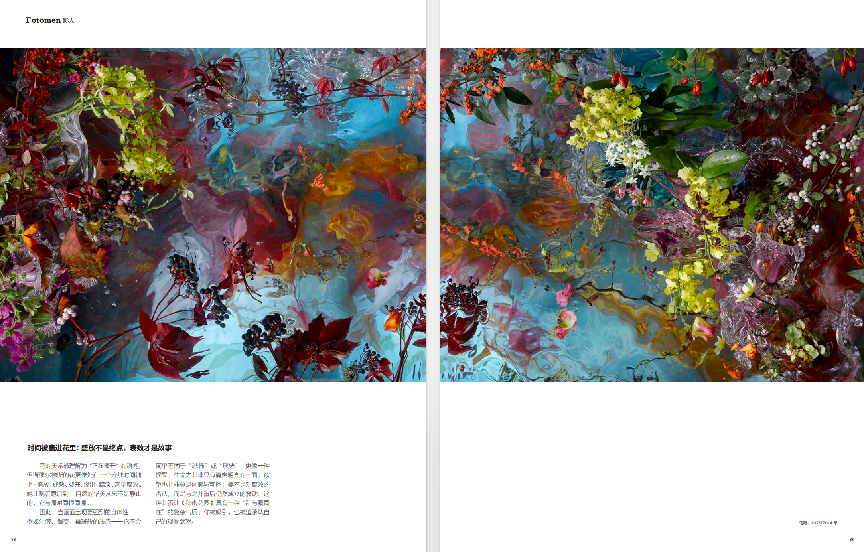
Time Packed into Flowers: Blooming Isn’t the End—Decay Is the Story
The beauty of flowers is often understood as the instant of “being in bloom,” yet Smulders’s flowers seem to sit on a continuous timeline: blooming, ripening, splitting open, seeping, dimming, even rotting. She makes the viewer realize that nature’s splendor is never static; it shares the same root system as withering.
So when the images take on a stronger corporeality—sap, browning, textures that resemble mildew—they do not simply translate into “horror” or “disgust.” They read more like a reminder: vitality is not only crisp and luminous; desire is not always decent or controllable; beauty is not the denial of decay, but a tremor that still holds when placed alongside it. This juxtaposition gives *The Secret Garden* a complicated temperament, one in which “sweetness and bloodiness coexist”: you are drawn in, and also forced to acknowledge your own desire to look.
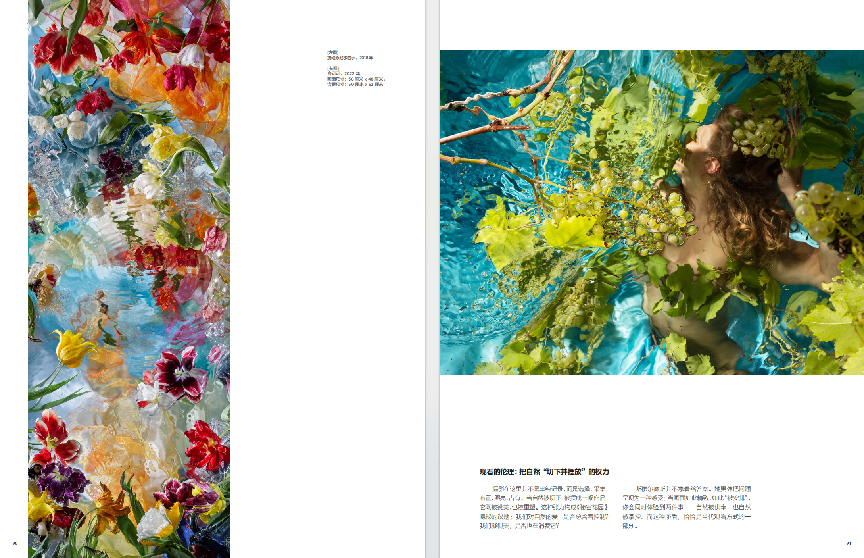
The Ethics of Looking: The Power to Cut Nature Out and Arrange It
Here, photography is not merely documentation, but an act of selecting, gathering, arranging, lighting, and possessing. Once nature is cut off and composed into an artwork, it is both praised and remade. This tension forms a concealed theme of *The Secret Garden*: does our love of nature always carry an impulse to control? When we gaze at beauty, are we also consuming it?
Smulders does not rush to provide answers. She seems instead to let the question appear as a feeling: when an image is so refined, so visibly “arranged,” you experience two things at once—nature being venerated, and nature being governed. That contradiction, precisely, is part of how we look today.
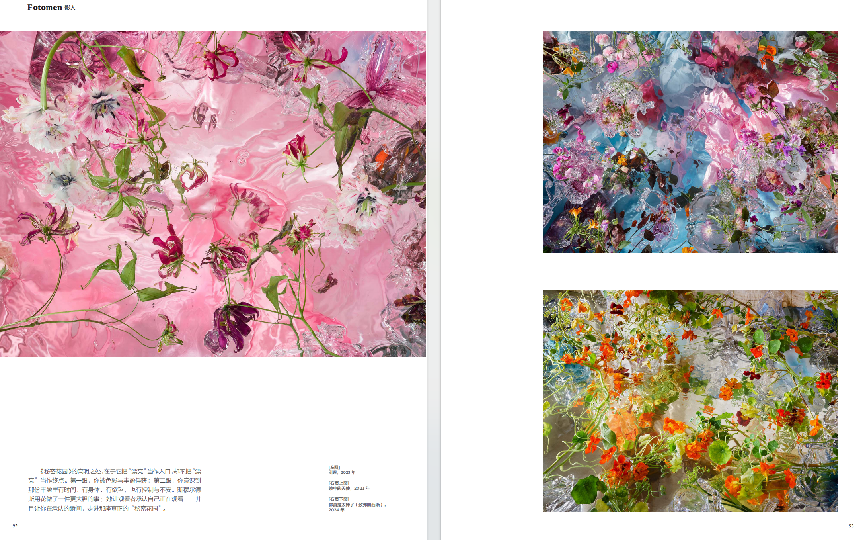
What makes *The Secret Garden* so astute is that it uses “prettiness” as an entry point, without treating “prettiness” as the destination. At first glance, you are captivated by color and abundance; at second, you realize that this abundance contains time, the body, desire—and also control and unease. Smulders does something bolder with flowers: she makes the viewer admit that they are looking—and in the very moment of that admission, you step into the true “secret garden.”
Photographers’Companion Magazine × Margriet Smulders
Q: The Secret Garden* sounds like a space that is both intimate and open. For you, is this “secret” closer to nature’s hidden structures, the hiddenness of the body/desire, or the hiddenness of looking itself? What kind of psychological shift do you hope happens between a viewer’s first glance and second glance?
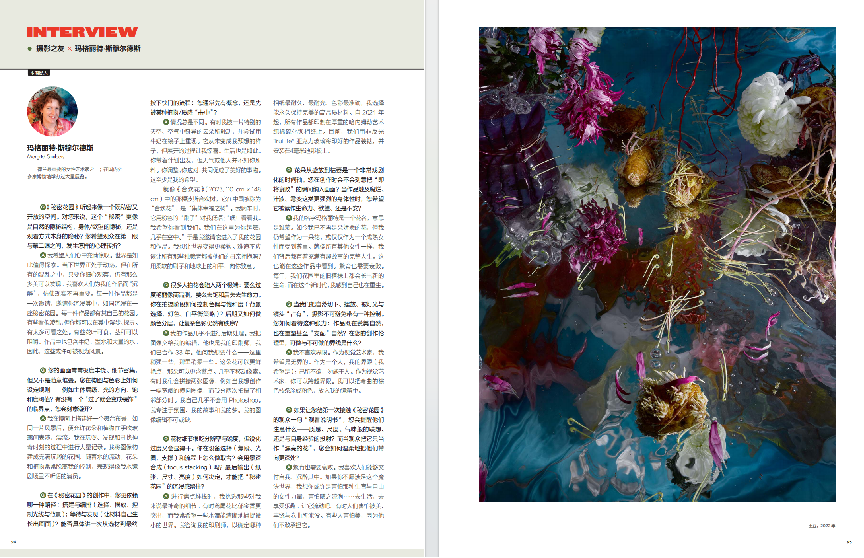
A: I want people to feel filled with wonder. The world is so worth exploring. The world right now is turbulent, but within all the chaos, if you look closely, there is still so much beauty to be found. I like it when people become “intoxicated” by my work, as if reality no longer matters. Each work is an invitation—an invitation to immerse yourself in it, as if you were entering a secret garden. Each work has its own garden. Some may look chaotic, but you can still wander and explore inside them. There is so much to see. Some leaves are edible; some stems can be chewed. The works also include milk, ink, and a lot of water. So perhaps these can be seen as landscapes.
Q: Your images are often extremely lush and dense with detail, yet they don’t feel like random accumulation. How do you set rules for composition and color—subject hierarchy, direction of light, saturation thresholds? Is there a point where it “crosses the line” into mere decoration that you consciously avoid?
A: After I build a stage set on a mirror—like a landscape—I let the flowers and plants perform and drift among hand-blown glass. I record a great deal while I’m playing, discovering, and searching for magical moments. I construct the image into a playful garden. As the water moves, the flowers and plants often slip out of my control, like unruly actors in my water-mirror theater.
Q: When making *The Secret Garden*, which path do you rely on more: building and directing (selecting, placing, controlling light and background), or waiting and discovering (letting the materials “grow” the image themselves)? Could you describe one concrete process—from choosing materials to pressing the shutter? Do you usually begin with a concept, or are you first “struck” by a certain plant/texture?
A: It is always different. Sometimes I’m moved by a particular sky, strange clouds in the air, and I try to recreate them with milk on a mirror. It never becomes what I imagined, but the unfolding surprises me. Life is like that too. You set out with a plan, but the weather—or other people—doesn’t behave as you expected. You adjust, you respond, and together you make something beautiful. At least, that is my hope.
Like the Persian silk tree in *Albizia* (2023, 110×148 cm). In China it is called “hehuan,” the “tree of collective happiness.” When I was cycling, it whispered to me with its pink “brushes”: “Hey! Look at me. I want you to see us. We are here to dance for you, almost in the air.” So I invited it into my garden and into my work. I want to make the world softer. Shouldn’t all those dictators be hugged by their mothers? With soft brushes and peace on Earth, I greet you.
Q: Many people photographing flowers fall into two extremes: either overly vivid, like product imagery, or desaturated to the point of losing vitality. During shooting, how do you control color cast and saturation (background choice, light color, white-balance strategy)? And in post, how do you separate color layers so complex colors still feel ordered?
A: I hardly do any post-processing. I hand the image to my editor—who is also my printer; we have worked together for 33 years. He asks me what I want: a bit stronger here, a bit softer there. This flower can be more vivid; that one can be more restrained. We barely move pixels. Sometimes we stitch two images together—for instance when I want a wide horizontal image and I photographed two adjacent parts separately. I hardly use Photoshop myself. I focus on the atmosphere, my story, and my dreams. My image editor is indispensable.
Q: Floral detail is unforgiving: it demands resolution and sharpness, but too much sharpening looks dry. How do you make trade-offs in gear and workflow (focal length, aperture, support)? Do you use focus stacking? And how do you decide on final output (paper, size, brightness) to preserve the immersive feeling of *The Secret Garden*?
A: When I do focus stacking, I select the details that feel most magical to me. Sometimes an iris stands out more than a tulip, and I often want certain droplets to capture tiny worlds sharply. I consult my printer to determine which paper is most durable, most lightfast, and most accurate in color. I choose high-quality materials that can remain perfect forever. Since 2021, all works have been printed on thick Hahnemühle fine-art 100% cotton baryta paper. At present, we frame the prints with non-reflective TruLife® acrylic glass and mount them on 4 mm Dibond.
Q: A flower’s arc from bloom to withering is a highly dramatic timeline. Do you deliberately include moments of “incipient decay” in the frame? When the work touches rot, sap, mold-like textures—stronger corporeality—do you want it read as vitality, desire, or unease?
A: My name, Margriet, is the name of a flower—it means daisy. I am no longer a delicate flower, but I still wish to be respected as a flower, or simply as a mature woman. Like all other women, we carry a whole life behind us, full of interesting stories. You can see that in these works too. Reproduction also needs decay. Every year, new life grows on old plants in our garden, and in this new era, I feel that I, too, am being reborn.
Q: When we cut nature off, place it, and“possess”it through light and lens, photography inevitably carries an element of control. How do you see this tension—your work both praising nature and reshaping it, even “dominating” it? In your creative ethics, where is the line between what can and cannot be done?
A: I don’t like boundaries. As a visual artist, I want to be without borders. As a human being, my boundary is (I hope): do not do to others what you would not want done to you. As a visual artist, you can cross boundaries. I can paint crooked brown branches pink and put them into my mirror box.
Q: If you had to give first-time viewers of The Secret Garden a one-sentence“viewing manual,”what would you ask them to pay attention to—texture, scale, smell-like associations, projection from personal experience? And if someone sees it only as “pretty flowers,” how would you gently lead them deeper?
A: Reproduction also needs decay. I like it when people can surrender themselves and become intoxicated. If you don’t want to enter this magical world, I think perhaps you are afraid of that female power of fertility and freedom—afraid of what flows with it… Go live, go enjoy yourself. Let it flow. Sometimes people are afraid of being flooded by beauty, abundance, and curling forms. Some people are afraid of beauty because they don’t dare to take responsibility for it.
See original article here:
See English article here: